

Michael Patrick Hicks

Michael Patrick Hicks is the author of the science fiction novel Convergence, an Amazon Breakthrough Novel Award 2013 Quarter-Finalist. He is also the author of the short horror story, Consumption, and his work appears in the science fiction anthologies, No Way Home, Crime & Punishment, and The Cyborg Chronicles. He lives in Michigan and is hard at work on his next story.


To stay up to date on his latest releases, join his newsletter, memFeed: http://bit.ly/1H8slIg


Website: http://www.michaelpatrickhicks.com
Facebook: http://www.facebook.com/authormichaelpatrickhicks
Twitter: @MikeH5856


Professional ReaderChallenge Participant2016 NetGalley Challenge
 

Review: The Last Weekend by Nick Mamatas (Audiobook)

The Last Weekend: A Novel of Zombies, Booze, and Power Tools - Nick Mamatas

My original The Last Weekend audiobook review and many others can be found at Audiobook Reviewer.


The Last Weekend, by Nick Mamatas, is billed as a novel of “zombies, booze, and power tools,” which may be the truthiest bit of truth in advertising that ever was. This sucker is chock full of all three, and each are at the core of Billy Kostopolos’s world and, to a degree, his identity.


The Last Weekend is told in first-person, so we get to know Billy pretty well (whether we like it or not). Billy is a haughty writer and alcoholic who hides his many insecurities behind choice phrases he has memorized from literature, lobbing out quotes from Shakespeare and Charles Bukowski in an effort to impress and/or alienate those around him. To put it simply, Billy’s pretty much a jackass. After being scorned by his girlfriend, he’s fled west to San Francisco without much in the way of advanced planning beyond drinking himself to death. He just so happens to wake up hungover one morning in the midst of the zombie apocalypse and decides to become a particular brand of city employee known as a driller. With supplies short, drillers are equipped with, naturally enough, power drills to destroy the brains of the infected. Even though he’s mostly waiting to die, Billy is still a writer first-and-foremost, and he chases experiences in order to give his words weight, and there’s not much weightier in the world anymore than running a drill bit through some old lady’s brain pan.


Like all really good zombie stories, this book is not about the zombies per se. True, the zombies provide plenty of impetus for action and reaction, but they’re largely set dressing to gussy up the plot. The real story here is Billy and the society he lives in, as people are forced to reconnect and survive in a post-apocalyptic world of sorts (America, we learn early on, is the only country affected by this plague of the undead). Mamatas has lots to say about the nature and struggles of being a writer, as well as alcoholism and depression. This all gets wrapped up in a dark sheen of cynical, black humor, occasional bouts of wicked violence, and an interesting detour through the history of the 49ers gold rush, SanFran cemeteries and burial rites.


Narrator Kevin T. Collins delivers a terrific performance with his narration, hitting all the right alternating beats of insecure and sanctimonious to bring Billy to life. Billy may not always be the ideal protagonist to spend eight hours with, but Collins makes this an easily enjoyable listen and serves Mamatas’s material quite well. The production quality is top-notch, and the audio is clean.


The Last Weekend is an easy book to recommend for horror fans looking for a more literary ride through zombie-town, or maybe just for those who thought Leaving Las Vegas needed a good dose of the undead and power tools. I suspect, though, that if there are any other authors giving this a listen, some of the material may hit uncomfortably close. Now, if you’ll excuse me, after having spent a few days in the company of one Billy Kostopolos, I think I need a drink.


[Audiobook provided for review by the audiobookreviewer.com]

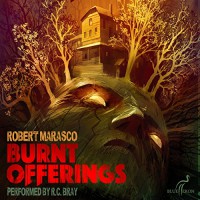
Review: Burnt Offerings by Robert Marasco (Audiobook)

Burnt Offerings: Valancourt 20th Century Classics - Robert Marasco, R.C. Bray

My original Burnt Offerings audiobook review and many others can be found at Audiobook Reviewer.


Burnt Offerings by Robert Marasco is a slow-burn of a horror novel, one that I have to admit I struggled with. For a book that’s around only 8 hours of listening time, it felt twice as long thanks to Marasco’s lethargic pacing and subtle scares.


At it’s core, Burnt Offerings is a haunted house story. Ben and Marian Rolfe, along with their son, Dave, escape the city for the summer and rent an opulent, lakeside mansion on the cheap. There’s a catch, of course, beyond the minor price-tag and the oddities of the Allardyce’s they are renting from, and Marian soon finds herself the caretaker of an unseen old woman who lives upstairs. The premise is sound, but the execution left me wanting far more than Marasco provided. See, I prefer quicker, deeper, faster cuts in my horror fiction and too much of the horror elements here revolved around a woman’s hair turning prematurely gray as she methodically cleans house. Too much of the book is even less intriguing than this. There are occasional, and well done, moments of creepiness, as well as forays into violence and madness, to interrupt the otherwise languid narrative before slipping back into a frustratingly slow story, until the last hour or so when things finally get kicked up a notch for an unsettling finale.


Burnt Offerings is a mixed bag of a book. I didn’t care much for the characters or Marasco’s plodding pace, but there is a richly developed theme about the curse of consumerism and desiring what others have. Much of the book revolves around Marian’s base need to possess what is beyond her, until she, and those she loves, is threatened by the very thing she wishes to consume. It’s a great element in the book, but one that I wish were amplified to a stronger degree in the characters. I wanted more psychological scares, more mania, more horror. I know Burnt Offerings was a notable influence on Stephen King’s The Shining, but frankly I’ll take that King book over this any day.


A part of me thinks that RC Bray, though, is a better narrator than this book needed. He has such a rich, deep voice and switches up character voices with ease and a lack of fuss. His delivery is spot-on, particularly during the rare frenetic scenes where he provides a suitable amount of gusto to bring the horror to life. In terms of production quality, there’s nothing to complain about – audio levels and clarity are consistently good throughout the run-time, and I like the little snippet of musical score that accompanied the opening and ending of this title.


While I found myself occasionally disturbed by some of the events depicted in Marasco’s book, I ultimately felt more disappointed and, too often, bored.


[Audiobook provided for review by the audiobookreviewer.com]
Review: Lights Out by Nate Southard

Lights Out - Nate Southard

There's something inherently, and perhaps deceptively, simple in Nate Southard's premise that, like 30 Days of Night previously, makes you wonder why it hasn't been done before. Whereas the Steve Niles/Ben Templesmith comic book series took the brilliant premise of vampires attacking an Alaskan town during the winter where the sun doesn't shine for a month, Southard sets his vampire story in a prison, an equally inhospitable killing ground for these bloodsuckers to roam wildly and violently satisfy their cravings.


The result is a ridiculously fun read with a few disparate wheels that Southard keeps turning in a way that looks easy. Yes, there are vampires, but we also get a good deal of atmosphere from the prison itself and its inhabitants. There's gang warfare, corrupt guards, the prison administration that doesn't want to believe the growing crisis is the result of the supernatural, and the prison's priest who realizes what's happening and wants to stop the growing spate of murders.


While the vampires are interesting creatures in their own right - and blessedly ugly, non-sparkling, vicious underground killing machines - there's enough human drama to occupy the daylight hours and keep the interest level high. Some of the prisoners are downright awful, others less so, and a couple that even earn a begrudging nod of respect and who are fun characters. While they fit certain prison archetypes (the Sicilian mafia boss, the Latin and black gang members, and the hardcore racist Aryan Nation trash), Southard fleshes out these characters well enough that they each, mostly, possess various shades of gray rather than being merely stereotypical cutouts and stand-ins to idle the time in between vampire attacks.


But, this is a vampire novel, straight-up, and one other thing Southard does very well is violence. There's plenty of gore to go around, from brutal shivings to throat-ripping nastiness that culminate into a wild finale. Fun stuff!


If you're looking for a dark, gruesome vampire story, this book needs to be on your reading list - it's good - damn good - and one of the most flat-out enjoyable books I've read thus far in 2016.


[Note: This review is based on an advanced copy provided by Sinister Grin Press via Hook of a Book Media and Publicity.]

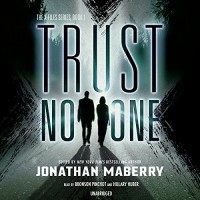
Review: The X-Files - Trust No One (Audiobook)

Trust No One: X-Files, Book 1 - Hillary Huber, Bronson Pinchot, Jonathan Maberry - editor/author

My original The X-Files - Trust No One audiobook review and many others can be found at Audiobook Reviewer.


I’ve been a fan of The X-Files since it premiered on FOX way back in 1993. I remember, quite fondly, watching the premiere with my mother and then, later, with friends as a trio of us creeped-out teens went for a walk around the neighborhood in the dark following the initial airing (and only airing on FOX) of the episode “Home.” Wandering the quiet, moonlit streets had not felt like the best of ideas so soon after meeting the Peacock family. The X-Files was one of the few shows I found myself religiously tracking on then-young America Online message boards, and then, many years later, I found myself tweeting #XFiles3 along with many other fans, begging 20th Century Fox for a third movie to wrap things up and properly celebrate the show’s twentieth anniversary. A third movie never happened, but the TV show did get a small reboot on-air, with the promise of more to come. I found myself in a rare spot for a man schooled by The X-Files and Agents Mulder and Scully, as we appeared to be recapturing the cultural zeitgeist that gave rise to the series and suddenly had new material featuring the intrepid agents in the form of comic books from IDW, a fresh batch of TV episodes, and, now, this first book in a series of anthologies – I found myself believing and trusting that The X-Files was alive once again.


Trust No One, edited by Jonathan Maberry, presents fifteen short stories from various authors, each opening up a new X-Files case that finds our intrepid FBI’s Most Unwanted chasing after, or being on the run from, paranormal activity and black-suited government agents of ill repute, some of whom leave behind the strong odor of cigarette smoke. Tim Lebbon starts the book off in strong fashion with “Catatonia,” about a group of missing teens who have returned and are catatonic. My favorite, though, was Brian Keene’s “Non Gratum Anus Rodentum,” a Skinner-centric story that involves were-rats and his history in Vietnam. Like most other anthologies, Trust No One is a mixed bag. I didn’t love every story here, but there are a number of truly worthwhile X-Files investigations that deserve exploration. Other standouts includes “Paranormal Quest” by Ray Garton and “The House on Hickory Hill” by Max Allan Collins, a pair of haunted house stories with a welcome twist in each. Kevin J. Anderson, who wrote a number of The X-Files books back in the day, is a welcome and familiar voice to the anthology with his story “Statues.”


Tackling these stories are narrators Bronson Pinchot and Hillary Huber, whose duties are divided between Mulder’s and Scully’s points-of-view. Pinchot carries the bulk of this book’s fifteen-plus hours run-time, but the two narrators occasionally work together on a single story that shifts between Mulder and Scully, and Huber narrates the handful of Scully-centric stories solo. Both Pinchot and Huber deliver a solid enough narration, with Pinchot showing a dynamic range in character voices and regional accents. And while Pinchot handles Mulder’s deadpan dialogue well enough, it does take some time getting used to new, different actors inhabiting the roles that Gillian Anderson, David Duchovny, and supporting cast members like Mitch Pillegi and William B. Davis, have made so iconic and familiar. On the production end of things, I have no complaints. The sound quality is fine, and the audio is crisp and clean, making for an easy listen.


Trust No One may not completely capture the glory days of The X-Files, but it does provide a number of intriguing avenues for investigation. The best stories here were a delightful reminder of why I fell in love with this series and these characters way back when, and perfectly capture the tone of the series, balancing the agents’ quirkiness and skepticism, and humor and horror. Those stories alone make this worth the price of entry.

Review: Return of Souls by Andy Remic

Return of Souls (A Song for No Man's Land) - Andy Remic

We are now two books into Andy Remic's ongoing A Song For No Man's Land series, and I have to admit that I'll be taking a pass on the rest. I'm just simply not connecting to the material and will have to chalk it up to the old 'it's not you, Mr. Remic, it's me' excuse.


You see, I'm not much for traditional fantasy. I slogged my way through Tolkein's Lord of the Ring series and felt rather unrewarded (the movies are better, as far as I'm concerned), and forced myself to make it through Steven Erikson's Gardens of the Moon because of all the praise that Malazan series has garnered. There are exceptions of course - I'm a giddy sucker for George R.R. Martin's A Song of Ice and Fire, and am always on the lookout for new R. Scott Bakker books. I have a much easier time with urban fantasy series, like Chuck Wendig's Miriam Black novels.


All of this is a long-winded way of my trying to explain that I thought Andy Remic's latest novellas would be up my alley, with their heavy on World War I and light on fantasy elements approach. Alas, it's not meant to be...


Although Return of Souls, and it's predecessor, A Song For No Man's Land, are novella length stories, I've felt they were both too long and unnecessarily plodding. Each book has been divided into four parts, with the first 3/4 devoted to Jones and his time on the frontlines fighting German soldiers and beastly creatures known as walriders. The last quarter, though, is when Remic decides to take a sharp and sudden turn, introducing new characters to eat up the page count, hopping back and forth in his narrative between newbie cast and the old-hands, in order to set up the next book. This is a pet peeve of mine.


When I finished the prior entry in this series, I was curious to see where the story would go. Unfortunately, I found myself hitting a wall before the half-way mark into this latest entry and was ready to move onto some other book instead. Remic introduces a new love interest for Jones to pine after, and it mostly serves to grind an already slow narrative to a near halt. I finished it, merely because these are short books (even if they subjectively feel much longer to me), but can't muster up the enthusiasm to rate it any higher than a 3-star read - it's an OK story, and while I certainly didn't hate it, Return of Souls failed to connect with me in any way past a bit of a time killer.


Fantasy fiends may have a better time with it, or those who don't mind a war story with rather languid pacing. This book, and this series taken as a whole thus far, just isn't for me.


[Note: I received an advanced review copy of this book from the publisher via NetGalley.]

Review: A Song For No Man's Land by Andy Remic

A Song for No Man's Land - Andy Remic

I've spent a while trying to gather my thoughts on this book and what to say about, but I can't help but surmise that it's a story with more pages than content. Quite a lot of it feels like a song stuck on repeat, but one that occasionally and magically teases you with bits of other important and interesting notes before returning to the same-old, same-old.


Set during World War I, we get plenty of combat scenes as our lead protagonist, Robert Jones, fights in the trenches, alongside his friend and fellow soldier, a big man with a big personality named Bainbridge. They have an easy friendship that becomes strained as the war goes on, each man seeing their share of injuries and...other things. Strange things. Monstrous thing. There's...something...lurking in the woods and haunting the battlefields, although too often this feels like a minor footnote in Remic's narrative until the big finale and a resolution that leads neatly into the larger auspices of this series.


While there are plenty of great depictions of life on the front-lines of The Great War, I couldn't help but feel like there was something missing. The focus on the battles, too, began to feel a bit stale by book's end, and I can't hep but wonder if Remic was stalling a bit to fill a word count requirement.


That said, the final chapter provides a nice bit of illumination and meat to the mythological structure underpinning the nature of the war in Remic's hands, and sets the stage for the next book. A Song For No Man's Land, in its resolution, feels more like an appetizer for Return of Souls, which I'll be diving into shortly. I suspect there's a promising series to be had here, but at the moment I'm enjoying the ideas (dark but intermittent bits of fantasy set against the front-lines of WWI) more than the execution.

Review: Beyond The Ice Limit by Douglas Preston and Lincoln Child

Beyond the Ice Limit: A Gideon Crew Novel (Gideon Crew Series) - Douglas Preston, Lincoln Child

The Ice Limit was one of my earliest and fondest-remembered books from Douglas Preston an Lincoln Child, so when I learned of the sequel, Beyond The Ice Limit, I was on this sucker like white on rice. As it happens, Beyond The Ice Limit also acts as Book #4 in their Gideon Crew series. I’ve not read any of the previous Crew books, but still felt at home in this novel.


I will admit, though, that it took me a little bit of time to warm up to Beyond The Ice Limit. The first twenty percent or so of the book is devoted to getting the plot up and running, acclimating the crew to life on board the research vessel Batavia, and shoehorning in a romance between Gideon and Alex, one of the ship’s rare female members. Romance, it should be noted, is not the biggest strength of Lincoln and Child, but you know it’s love at first sight for Gideon and Alex because of the way her breasts press against the ship’s railing when she leans out the deck to enjoy a drink and watch icebergs, and the way Gideon’s eyes linger on her ass and breasts in virtually every time they cross paths. Gideon is apparently also a magician – a throwaway trait that Lincoln and Child exploit for exactly one whole scene before dropping it like a concrete block into the ocean – and, lo and behold!, so is Alex! So see – romance!


But no faster can you start humming the theme from The Love Boat, and certainly no faster than Alex can swear she won’t be involved in a shipboard romance only to drop trou with Gideon a few pages later, and just in time to prevent Lincoln and Child from having to figure out some method of pesky character development, it’s time to contend with the alien menace they’ve all been recruited for and the authors can finally get down to telling the kind of story they are actually good at and quite well known for. And the nature of the alien threat is?! … a tree.


It turns out that the meteorite at the center of The Ice Limit was less a meteor and more of a seed, and it has taken root in the Antarctic seabed. And this sucker is pretty massive, which means certain doom for a particular planet we’re all fairly attached to.


Snark aside, I actually found myself enjoying this book quite a bit. Granted, I spent roughly the first quarter of it wishing I were instead reading Warren Ellis’s comic book series TREES, but it’s around that post-quarter-mark that Lincoln and Child stop mucking about and get their act together, finally figuring out the story they want to tell, and that many readers have demanded since finishing The Ice Limit years ago.


This is a story that hits a large number of my particular sweet spots – we’ve got a confined and claustrophobic setting (the RV Batavia) in the midst of a desolate area (Antarctic waters), an alien menace, smart people getting outsmarted by more primal forces and then recovering their wits enough to strike back, and a continual escalation of threats with some wonderfully gory and unsettling “oh crap!” moments. There’s plenty of scientific posturing going on and plausible-enough sounding threats that serve to take the alien threat to the next level. I dug it all this stuff quite a lot.


But still, Beyond The Ice Limit has a few particular problems. Most of those problems are front-weighted, so if you can wade through the first quarter of the book you’re pretty golden. I’m not terribly thrilled at the author’s choice of fridging their most prominent female character in order to compel their male lead into action – quite frankly, this is a tiresome, worn-out staple that we (particularly we male authors) should be moving away from. The big finale, the one the authors spent several hundred pages leading up to, is sadly anticlimactic, to the point that Lincoln and Child spend much of their epilogue telling us about it when they really should have been showing us a chapter or two previously.


Could this book have been better? Yeah, I think so. Does it make me want to check out all those Gideon Crew books I missed? No, not really. I was not so captivated by this character that I’m dying to know what else he’s been up to, or what comes next for him, but I’m sure I’ll get to them one of these days when I’ve nothing else more immediately interesting in my TBR pile and I’ve gotten caught up on all those Pendergast books I’ve missed along the way. Thankfully they’re not required reading, and although this title ties into that character’s on-going series, this book is pretty much a stand-alone title. Did I at least have fun? Oh yeah. Quite a lot. A surprising amount in fact!


And it’s because I had so much fun that I’m willing to overlook some of the weaknesses I encountered here. I can overlook a lot when I’m enjoying the ride, and although I harped on this book for having a pretty mundane and craptasticly rocky start, there’s roughly 75% of a really good sci-fi horror book right here. Plus, I’m a sucker for high-seas horror, particularly when that horror is set in the more extreme regions of Earth. I got to read about a crazy alien invasion in the Antarctic with some awesome gory scenes that, in turn, reminded me a little bit of The Thing and Invasion of the Body Snatchers. That’s pretty cool.


[Note: I received a copy of this title for review from the publisher via NetGalley.]

Review: Company Town by Madeline Ashby

Company Town - Madeline Ashby

...and just like that, Madeline Ashby has instantly made it onto my list of must-read authors.


Company Town has all the trimmings of things I love. There's a good dash of sci-fi with some near-future razzle dazzle cybernetic augmentation, genetic engineering, Singularity conspiracy, and a nice heaping of serial killer mayhem to round it all off. The setting is wonderfully impressive (and forms the basis of that kick-ass cover!) - the titular Company Town is a city-sized oil rig off Newfoundland that has just been bought by the Lynch Corporation.


Hwa, a body-guard for the city's sex workers, has been brought on board to protect the youngest of the Lynch heirs after a series of death threats are made toward the boy. Hwa is a wonderful character in her own right, and deeply layered. Afflicted with Sturge-Weber, half her body is stained red; this genetic abnormality perfectly reflects and informs her personality. She's an outsider in Company Town both because of her physical imperfections and her choices. She's one of the ultra-rare denizens of Company Town to have absolutely no genetic modifications or cybernetic upgrades, which makes her an outcast. Her employment with Lynch only serves to further separate her from those she was once close to. She refers to her physical affliction as a stain, but it's a stain that runs bone-deep and straight up into her psyche as she struggles against being an outcast and fighting to remain at arm's length from the world around her. In Ashby's hands, Hwa is perfectly defined, as interesting and she is engaging.


Company Town is a great read, but primarily because of the characters. There's plenty of great ideas on display here, and plenty of room for future installments should Ashby be planning a series of this, but it's the cast and their relationships to one another that, first and foremost, make this book truly compelling.


[Note: I received an ARC of this title from the publisher via NetGalley.]

Review: The Adventures of Tom Stranger, Interdimensional Insurance Agent by Larry Correia

Free: The Adventures of Tom Stranger, Interdimensional Insurance Agent - Audible Studios, Rymor Publishing Group;Jerald Tuck Jr;Don Bilger;Carl Roehrich;Kimberlee Bowen;Larry Milton;Cindy Baldwin;Jennifer Luxmoore;Stacie Turner;Jane Parillo;Jimmie Espo;Adam Flaherty;Paul Legault;Karen Hyde;Marietta Giorno;Courtney Wetzel;Stacy

My original The Adventures of Tom Stranger, Interdimensional Insurance Agent audiobook review and many others can be found at Audiobook Reviewer.

While listening to The Adventures of Tom Stranger, Interdimensional Insurance Agent, one word kept popping into my head – ridiculous. Although this audiobook is billed as a comedy, ‘ridiculous’ is not necessarily a compliment.  Comedy, you see, is largely subjective. I’ll take George Carlin over Adam Sandler any day of the week, and, unfortunately, this Audible Original was a lot like mainlining a Sandler production – it’s ridiculous, but not in a good way.

Tom Stranger is an insurance agent for the multiverse. He’s been mistakenly paired with a yuckster of an intern who reminded me of Shaggy from Scooby-Doo, and who has a pathetic GPA in his Gender Studies degree track (this, by the way, is an example of one of the running gags that The Adventures of Tom Stranger has to offer). Stranger voyages across multiple Earth’s in search of his proper intern, squaring off against his rival, the insurance agent Jeff Conundrum. Along the way, there’s a few dashes of Chuck Norris hero-worship, purple people eaters who harvest men’s scrotums, and a meta guest-appearance by the author Larry Correia, who finds himself in need of rescuing by the ubiquitous, bow-tie loving insurance agent.

Correia sets the tone immediately in the opening chapter, which involves Adam Baldwin, President of the United States and celebrated star of the long-running Firefly, grappling with a global crises as the scrotum-collecting purple people eater’s devour Europe. A deranged, loud-mouthed Secretary of Defense loses it over a computer glitch, shoots the computer, and then acts like a massive buffoon while drawing stick figures of the alien creatures gathering their victims genitals. Along the way, we get some dated humor about Windows Operating Systems and John Tesh. The rest of the book follows a similar path for the next two hours, with much of the humor focused on hitting cheap, easy marks like Today’s Youth, Telemarketers, Obama, and Occupy Protestors. Although the setting and premise are most certainly unique, none of the jokes are particularly original or funny.

Narrating Tom Stranger is not-President Adam Baldwin, from the short-lived TV series Firefly. Although the story itself didn’t do much for me, Baldwin’s narration is pretty good and he’s clearly having a fun time hamming it up with the material. He delivers a pretty broad range of character voices here, from the overly-aggressive Secretary of Defense to the level-headed Stranger, with dashes of milquetoast in between. He also does a damn effective manatee. On the production quality end of things, the sound is crisp and clean, and on par with the handful of other Audible Originals; in this regard, it’s as excellent as I expected.

Audible is currently offering The Adventures of Tom Stranger, Interdimensional Insurance Agent for free until June 21, 2016. Not a bad deal to hear Adam Baldwin imitate a manatee.

[Audiobook provided for review by the audiobookreviewer.com]

Review: Odd Adventures With Your Other Father by Norman Prentiss

Odd Adventures with your Other Father - Norman Prentiss

Odd Adventures With Your Other Father is a wonderful little book, with all kinds of emotional and narrative layering.


Although it is structurally a bit dissimilar, it resonated in a similar way with me and reminded me of Stephen King's Hearts In Atlantis - this book is a series of short stories, as relayed by Celia's father, Shawn, to her, and tied up around Celia's own journey to dig even deeper into the history of her other father, Jack.


Jack and Shawn are a closeted couple, and Shawn tells Celia of their road trip across the country in 1985, following their graduation from college. Jack has a gift, a glamor, and, thanks to their bond, can transmit imagery only to Shawn. At first it's a bit of a gag, but as they find themselves in more precarious situations Jack's gift takes on more of a tone of warning in order to protect them both. Across a series vignettes, Shawn tells their adopted daughter about their travels to strange locales and close encounters with the paranormal.


Each of Shawn's stories are well told and Prentiss uses this character as narrator masterfully. I couldn't help but get wrapped up in Shawn's stories myself, and was eager for more. Just as good is Celia's own adventures. Throughout it all, you get a wonderful sense of familial love and deep, honest affection that really tugs at the heartstrings. This is definitely a family I'd like to spend more time. Thankfully, in a recent interview Prentiss revealed he is working on a sequel to this book called Haunted Places With Your Other Father, which I'll definitely be looking forward to.

Review: Motorman by Robert E. Dunn

Motorman - Robert E. Dunn

After murdering a prostitute, junkyard car repairman Johnny hits the road and finds himself in even deeper trouble than he bargain for. Stuck in the Ozarks, he finds himself holed up at an auto repair-shop, where his talents are demand because he "has the good hands," and surrounded by half-metal men and a weird blue ooze.

If you haven't glommed onto it yet, Motorman is a weird novella. Although it has a few really good moments, the highlight of which is some exceptional body horror in the last couple chapters, it is not without its fair share of problems (needless to say, your mileage may vary.)

I should note here that I am not in anyway a "car guy." I don't really get the appeal of sports cars - yeah, they're nice, but... so what? For me, a car is an overly expensive tool that I can never stop investing in because it always needs gas and oil and brakes and a host of other pain in the ass things that cost way too much money, and which gets me from Point A to Point B. If I lived in an area that had consistent and reliable public transit, like Chicago or New York, I would happily ditch my ride in favor of a subway pass. If electric cars had battery life that could survive hundreds of miles on a single charge, I would be pretty pleased in knowing that I don't have to get another freaking oil change or deal with the artificially inflated prices at the pump. So yeah, I am not at all a car guy. However, I am not above having my curiosity piqued by gorgeous cover art and exclamatory text promising mad science and alien goo.

Johnny, though, certainly is a car buff. I presume author Robert E. Dunn is as well, but if he isn't the technical details and junkyard information at least rang true enough to my ignorant eyes, and I'm more than willing enough to take his word for it when it comes to engine blocks and horsepower and whatever the hell else he threw in there.

What didn't ring quite well enough, though, were some of the more supernatural/fantastical elements Dunn inserts into the narrative, primarily the ooze. What the heck was that stuff? Where did it come from? What does it want? Why does it do what it does, and how was it discovered? Like Mary Shelley's Frankenstein, Motorman completely eschews any explanation for the hows and whys of the science behind the horror.

The ooze and the dead hooker are largely MacGuffins so that Dunn can get to the meat of the story, but I still found myself wanting more details and more consequences. I understand Johnny killing the girl in a fit of rage and fleeing the scene during the book's opener, but I kept expecting his anger management issues to play a more central role to his character, or for his murderous actions to carry some weight beyond the opening segment. Instead, Johnny spends the majority of the book being a really placid grease-monkey. He's also a hapless loser who instantly falls in love with any girl who even so much as gives him a side-eye. I just wish there had been a bit more range to his character, and more turbulence to his clearly troubled emotional state and immaturity. He spends a little much of the book being an observer for my liking, although the few times he is allowed to get his hands dirty it's to great effect.

As far as the Damaged People! thing goes, I dug the heck out of this segment of the premise. This isn't quite spoiler territory, I don't think, but the local doctor that Johnny ends up working for has devised a way to merge man and machine thanks to the mysterious ooze. That's pretty cool! And it brings about a couple deliriously trippy segments throughout the book that I loved a lot.

This is a quick read, and I found it to be enjoyable over all. It's not high art, and it's not completely flawless in execution, but it is a good bit of B-movie, grindhouse fun. And the events leading into finale are pretty dang good, particularly during the last couple chapters of this short book. There are several really cool ideas on display here, and I completely dug Dunn's Frankenstein-ian riff on greasers and hot rods. Is greaser gothic even a thing? Maybe it should be. I'd be more than willing to check out another!

[Note: I received an uncorrected advanced proof copy of this title for review.]

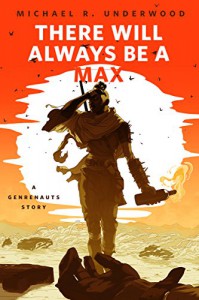
Review: There Will Always Be A Max (A Genrenauts Story) by Michael R. Underwood

There Will Always Be a Max: A Tor.com Original - Michael R. Underwood

What I love most about the Genrenauts series is the elasticity the central premise allows for each subsequent entry. If you're not familiar with Michael R. Underwood's latest series, Genrenauts is a literary-focused spin on Quantum Leap with a side of Star Trek. Earth Prime - our Earth - is the center of a multiverse where any number of story genres exist. The Genrenauts, led by Angstrom King, travel from one story world to the next, setting right whatever has gone wrong.


So far, his team has helped fix a broken story in the Western world, and another in the Science Fiction realm. Now, Underwood turns his attention, ever so briefly, to the post-apocalyptic wasteland that movie buffs are sure to recognize in this Tor.com Original short story, There Will Always Be a Max.


Angstrom King rides solo through a desert wasteland, one so desperate for a lone, renegade hero in a region that "ached for stories like it ached for water." King has taken on the identity of Max, a weary traveler with a souped up car, a shotgun, and a worn leather jacket. His mission is to help a small group of weary travelers make it across the stretch of irradiated land and get a water filtration unit back to their people. That is, if they can survive being chased and attacked by the gang of marauders known as the Skull Boys.


Yep - this is a Genrenauts story that is full-on Mad Max, and boy is it a fun one. It's a quick read, and while Underwood plays with some familiar tropes and a bit of in-world literary analysis, this is basically a twenty-page chase scene actioneer. As far as the story goes, it's a one-and-done, short and sweet, but I'm hopeful that the Genrenauts, either as the usual team defined in the previous two novellas, or on another solo mission, find themselves in another post-apocalypse landscape soon.


If you haven't read any of the prior Genrenauts exploits, no worries - you can start off here just as easily as with Episode One, The Shootout Solution.


read more

Review: The Invasion by Brett McBean

The Invasion - Brett McBean

The Invasion, by Brett McBean, is a startlingly bleak home invasion story, but one that is wonderfully written. The opening paragraph alone delivers the goods and the promise of what's to come.


"There is something ominous about a front porch light glowing in the daytime. It speaks of a place left in limbo, of lives interrupted and of simple, everyday tasks forgotten. It signifies that for this house, night has yet to end."


Damn if that didn't suck me in right from the get-go!


The night is certainly long for the family tucked behind the once-believed secure walls of the Carmela house. Deb, a romance novelist, has just finished hosting Christmas dinner for her brother, his boyfriend, her niece, and literary agent. After the guests have tucked themselves into bed, they are brusquely awoken by strangers in the home, who then tie them up and taunt them before things escalate further. And then Mr. Fear arrives...


Although The Invasion is a straight-up home invasion horror, this is not a merely a burglary interrupted but a story of psychopathy and cultish belonging. For the invaders, it isn't about robbery so much as it's sheer entertainment for them, their enjoyment fueled by their victim's fright.


At times, McBean's work is downright savage, and he doesn't shy away from the cruelty of his crazy invaders, who get off on filming their horrendous crimes. The character work is nicely executed (no pun intended), and by the final pages I was really feeling for Deb, and her friends and family, and the devastation that's been unleashed upon them. McBean uses their shared history as both friends and family to give us insight into their past relationships with one another, and with the Carmela house itself. Although the focus is squarely on the humans within, the house itself provides the narrative with its shape and structure as each chapter takes us on a tour of the large residence.


The Invasion is a chilling story, and while it is violent it never delves into overdrawn sequences of torture porn. McBean relies on his characters and atmosphere to bring the biggest scares, along with the frightening threat of home invasion that many readers will bring to the reading all by themselves.


[Note: An advanced copy of this title was provided by the publisher for review.]

Review: Strike (Hit #2) by Delilah S. Dawson [Audiobook]

Strike - Delilah S. Dawson

My original STRIKE (HIT #2) audiobook review and many others can be found at Audiobook Reviewer.

Picking up moments after the conclusion of the previous book, Hit, Strike finds Patsy Cline and her boyfriend, Wyatt, on the run with a truckload of laptops containing information on Valor Savings Bank’s conspiracy to buy out the United States government. They run headlong into the arms of the underground rebellion, the CFF – Citizens For Freedom – and its militaristic cell leader, Leon Crane. The CFF is composed of those few who are aware of Valor’s takeover and the demise of US democracy, and their plan is to fight back, no matter the cost. Joined by a handful of other teens on the run from Valor and united by their recent shared history as indentured assassins for the New World Order of Valor Savings, Patsy soon discovers that the CFF has secrets of its own.

As with Hit, author Delilah S. Dawson tells a hard-edged story of young adult dystopia packed with plenty of action, thrills, and more importantly, believable characters. Patsy and Wyatt are a great couple, and it’s fun to watch their relationship deepen, while Patsy grows into her role as a leader as their circle of friends expands. There’s plenty of paranoia to go around, especially as the teens find their world turned upside down more than once across the duration of Strike, and Dawson presents plenty of solid world-building to flesh out Valor’s history and plans to take over the nation.

One of the elements that I appreciated the most in both of these books is the setting of rural Georgia. While the threat of Valor is nation-wide, Dawson’s choice to place the start of a financial takeover dystopia in the suburbs and backwoods locales of her own backyard in the South provides a brilliant bit of scenery, and a much appreciated change of pace from the usual big-city areas these types of stories are typically set-in. It also helps give Strike a fun little bit of Red Dawn flavor!

Returning to narrate is Rebekkah Ross, whose performance here is a great as it was the first time around. If you liked her work in Hit, and I most certainly did, then you’ll do just fine with her second turn with these characters in Strike. Her Southern accents are well-done to this Northerner’s ears, but never distract in the few instances they’re used. Ross maintains a “typical” American accent for the bulk of her narration, making the audiobook completely accessible. She does a good job hitting a deeper register for the male characters, and demonstrates enough vocal range to provide separation among the various characters during dialogue. The production values are solid across the board, and this audiobook is a representative of the professional qualities I would expect from a major publisher like Simon & Schuster Audio.

[Audiobook provided for review by the audiobookreviewer.com.]

Review: A Whisper of Southern Lights by Tim Lebbon

A Whisper of Southern Lights (The Assassins Series) - Tim Lebbon

Although I was not a big fan of Lebbon's previous two installments in his Assassin's series -- "Dead Man's Hand" and "Pieces of Hate," collected together in the recent Tor novella, Pieces of Hate (reviewed here) -- there were enough interesting ideas in Pieces of Hate to keep me curious enough to see what comes next. Maybe it was because I had enough of the background story, or perhaps because I went in expecting there to be zilch in the way of resolution regarding Gabriel and his battles against the entity known as Temple, but I found A Whisper of Southern Lights to be much more satisfying.


Gabriel and Temple are basically immortals, and their personal battles have allowed Lebbon to play in some interesting settings. We've gotten a weird western and a bit of high seas pirating adventure, and now Lebbon takes us to Singapore circa World War II (personal note: Lebbon teases an Antarctic expedition as another setting in their worldwide struggles through time, and I'd pay good money to read that story, because I'm just a sucker for stories set in that region). Both Gabriel and Temple are hunting for a man named Jack Sykes, which never bodes well for the dude unwittingly falling into the middle of their bloody, violence-fueled triangles.


I was fortunate enough to have a wonderful vacation in Singapore a while ago, so I had no trouble imagining the sweaty treks through the rain forest, and war-time is always an interesting period to explore some supernatural shenanigans. I dug those elements the most here. I fell in love almost immediately with Singapore, and hope to go back one of these day. Books set in this region at least provide enough of a mental sojourn until I can physically head there again. It's also a bit of a reminder that I need to seek out more Singaporean literature... Yeah, I know, I'm digressing here.


A Whisper of Southern Lights is a short novella, which makes for a brisk read. Lebbon gives us enough sketches of life on the front lines in the Pacific Theater, but I wouldn't have minded more details. Gabriel's relationship with Temple has always been one of the strongest elements of this series, and that remains true here, as well. The ending felt a little bit rushed, but there's a marvelously macabre display where our characters confront one another before the requisite cliffhanger.


Yeah, another cliffhanger and little in the way of resolution. The last line of the book, though, does actually have me antsy for another entry, so kudos to the author! I feel much more invested in this series after this particular entry than I did with Pieces of Hate.


[Note: I received an advanced review copy of this title from the publisher via NetGalley.]

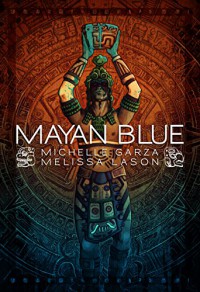
Review: Mayan Blue by Michelle Garza and Melissa Lason

Mayan Blue - Melissa Lason, Michelle L. De La Garza

Dubbed The Sisters of Slaughter by the editor of Fireside Press, Michelle Garza and Melissa Larson make their novel-length debut with Mayan Blue. I think the Fireside folks were on to something with their proclamation, and the sisters earn their bloody stripes well here.


First off, let me just say how glad I am to read a horror book that is influenced by ancient continental American lore, rather then the johnny come lately Christian influences that predominate most modern works. Granted, those influences have produced some great stories, particularly in terms of my recent reads like Paul Tremblay's A Head Full of Ghosts and Hunter Shea's I Kill In Peace. But it's fun to spice things up a bit by reaching into a deeper, richer history of the Americas.


Mayan Blue, as the title indicates, reaches back to the peak of the Mayan heyday, drawing on the occult beliefs of Mesoamerican and Central American people to craft a present-day horror story. Building off the debunked speculations of Mayan civilization reaching as far north as Georgia, the sisters craft a novel in which such speculations are on the verge of being validated. Unfortunately, the professor in possession of the evidence has gone missing, and his small team of university researchers are en route to recover him.


From the outset, Garza and Lason let the blood spill, plunging their small cast of characters into the depths of Mayan hell. There's plenty of action to go around as the group is confronted with a number of horrors, from the labyrinthine and booby-trapped maze of the newly discovered Mayan temple to the angry gods and their owl-headed, sharp-clawed servants.


This is a fun and quick bit of adventure horror, with a number of well-drawn splatter scenes. Bodies are flayed and entrails spilled all over the place. My only real complaint about the book is that the characters are paper thin, with several of them never rising above a quickly drawn stereotype before being dispatched in some nicely grisly scenes. While their deaths are certainly interesting, it's a shame that their demise is the most interesting thing to happen to them in the brief moments we spend with them. In order for horror to be truly effective, there needs to be characters to root for and against, people you can become attached to and sympathize for and with. I didn't feel particularly attached to anybody in this book. While the gore and setting may be memorable, the characters, unfortunately, are not.


Aside from that, I had a fun time with Mayan Blue. I greatly appreciated the change of scenery it provided, and the way its influences in both the creature-feature and slasher genres merged to form a truly appropriate temple of doom.


[Note: this review is based an advanced, uncorrected proof copy supplied by the authors in exchange for an honest review.]